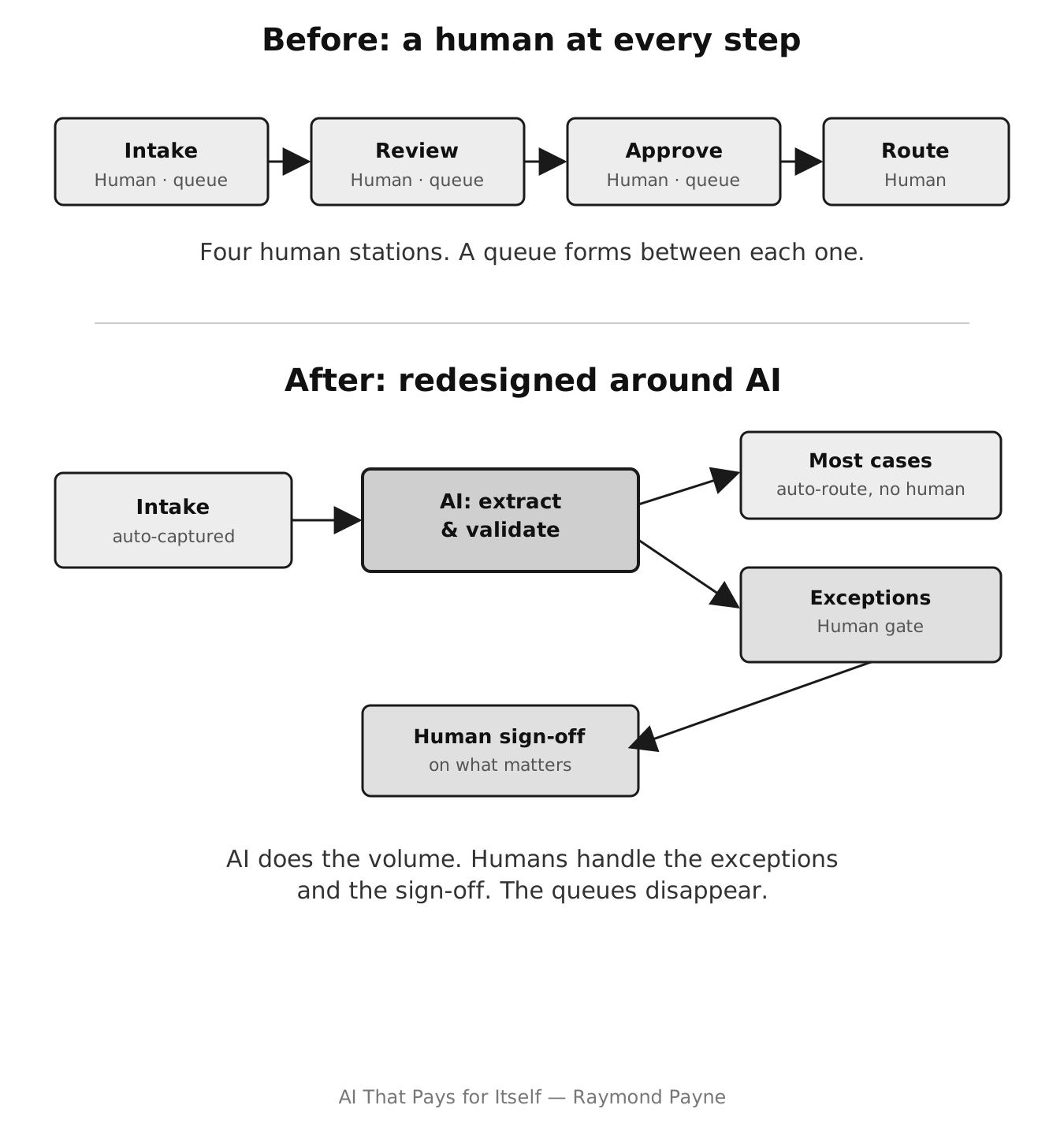
The 2-hour workflow redesign session
Put the people who actually run your worst workflow in a room for two hours. One rule: every step has to justify why it exists before you decide whether it survives. The AI decision comes last — almost as an afterthought, once you know what the redesigned flow actually needs.
Before the session
- ☐ Pick the one workflow — your worst one, the one that generates the most complaints or eats the most overtime.
- ☐ Invite everyone who touches it, including the person who built the shadow spreadsheet or the side process nobody officially sanctioned. That person has already mapped, by hand, where the real work lives.
- ☐ Do not invite people to describe the process the way the org chart describes it. You need who does what, in what order, and why.
- ☐ Bring a whiteboard or large paper. No slide decks.
Workflow selected: ______
Date / time: ______
Participants (name + role in this workflow):
- ______
- ______
- ______
- ______
Agenda
| Time | Block | What happens |
|---|---|---|
| 0:00–0:20 | Map the real flow | Each person describes what they actually do — not what the policy says. Capture every step, handoff, queue, and shadow workaround on the whiteboard. |
| 0:20–0:50 | Kill the steps that shouldn't survive | For each step: ask "why does this exist?" Steps that exist because "that's how we've always done it" get challenged. Steps that exist because a human couldn't be trusted to do two things at once are candidates to collapse. |
| 0:50–1:20 | Redesign from scratch | Ask the redesign questions below. Draw the new flow on a clean section of the whiteboard. Do not start with "where does AI go." Start with "what does the work actually need to produce, and what's the simplest path to that?" |
| 1:20–1:45 | Assign the AI decision | Now — and only now — identify which steps in the new design need automation, which need AI judgment, and which must stay with a human. Name what you need to buy or build. |
| 1:45–2:00 | Commit to next steps | One owner, one date, one action per open item. No vague "we'll look into it." |
The redesign questions (use these at the 0:50 mark)
- If we were designing this workflow from scratch, knowing what AI can now do, would it look anything like what we run today?
- Which steps exist only because one human couldn't be trusted to do two things at once? (Those collapse into a single system step.)
- Which handoffs exist because the work crossed two people's jobs — not because the work itself required a handoff?
- Where does the queue sit, and why? Is the queue a real constraint or just a placeholder from an old design?
- Which approval steps exist because someone genuinely has to make a judgment call? (Protect those — make them clean gates, not rubber stamps.)
- What does the shadow spreadsheet or the unofficial workaround tell us about where the official process fails?
Before / after capture
| Step / element | Before (current state) | After (redesigned state) | Human, system, or AI? |
|---|---|---|---|
| Step 1 | |||
| Step 2 | |||
| Step 3 | |||
| Step 4 | |||
| Step 5 | |||
| Handoffs (count) | |||
| Human judgment gates | |||
| Shadow workarounds |
Decisions and next steps
| Item | Owner | Due date |
|---|---|---|
Want a second set of eyes on this in your firm? The no-sell promise applies — if it isn't a fit, I'll tell you in the first ten minutes.
Book a 30-Minute Call →